

Brushed Stainless Steel Sheet: The Most Popular Decorative Finish Explained
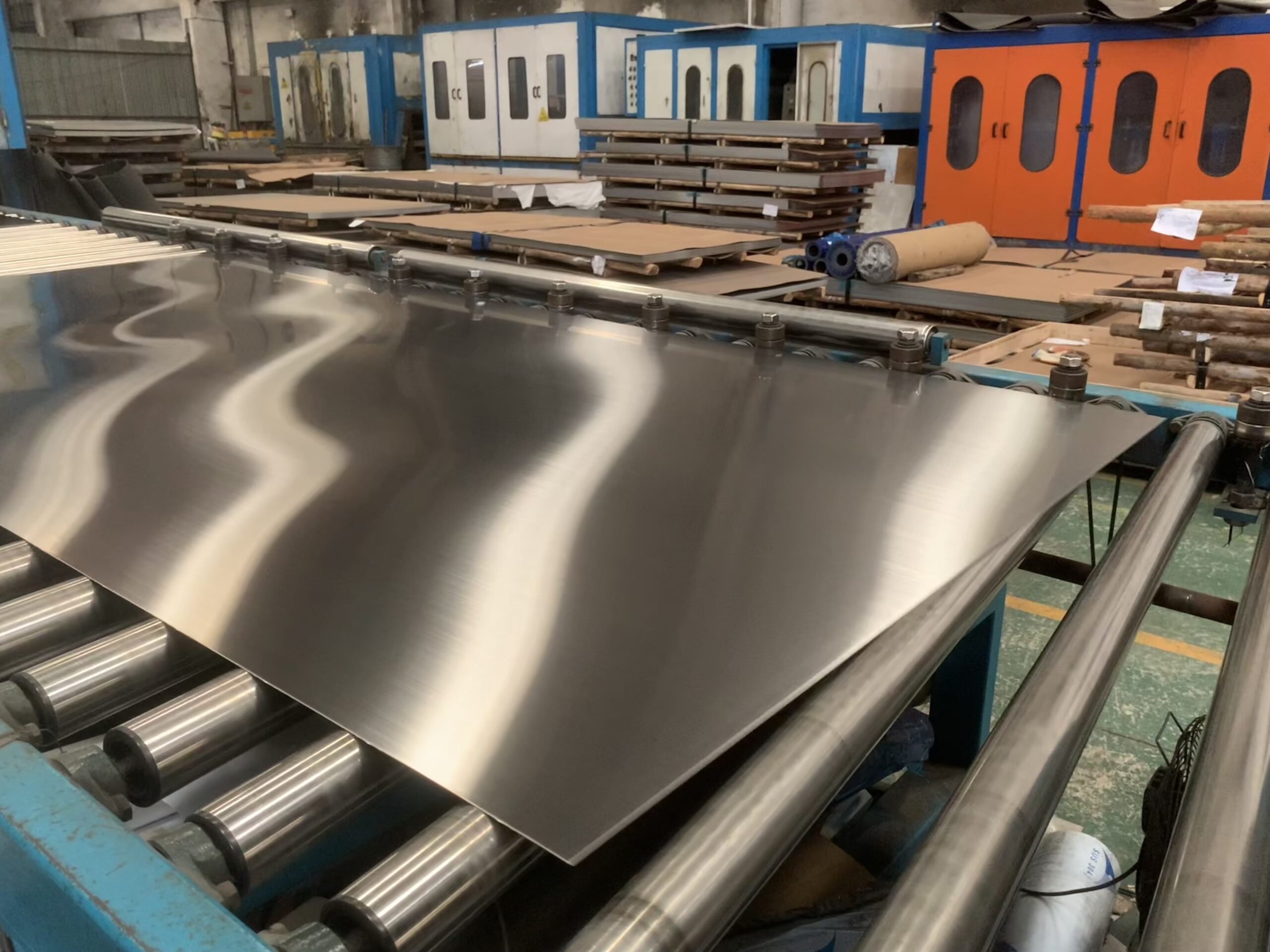
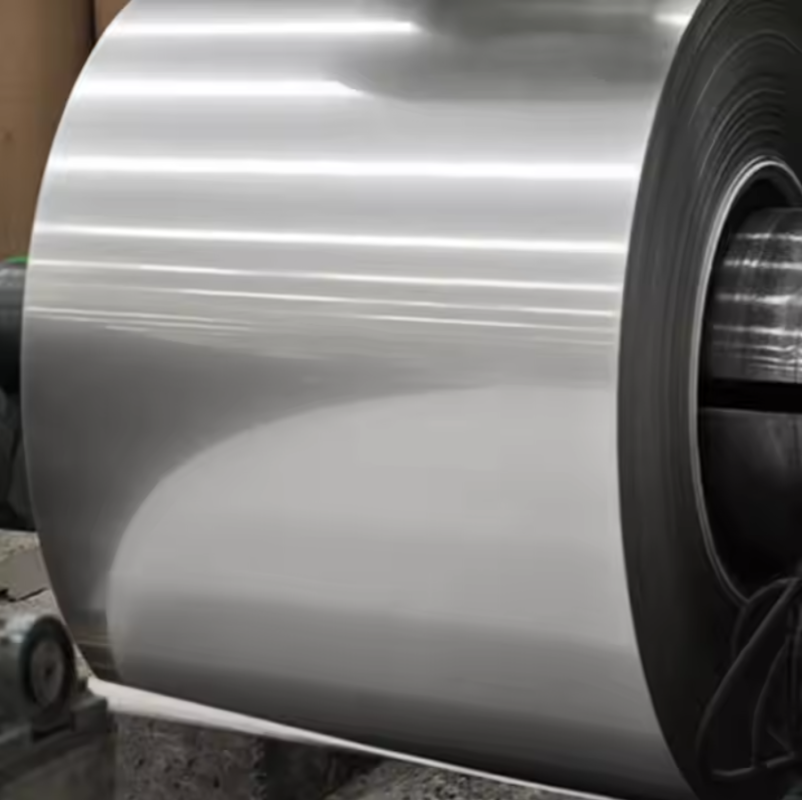
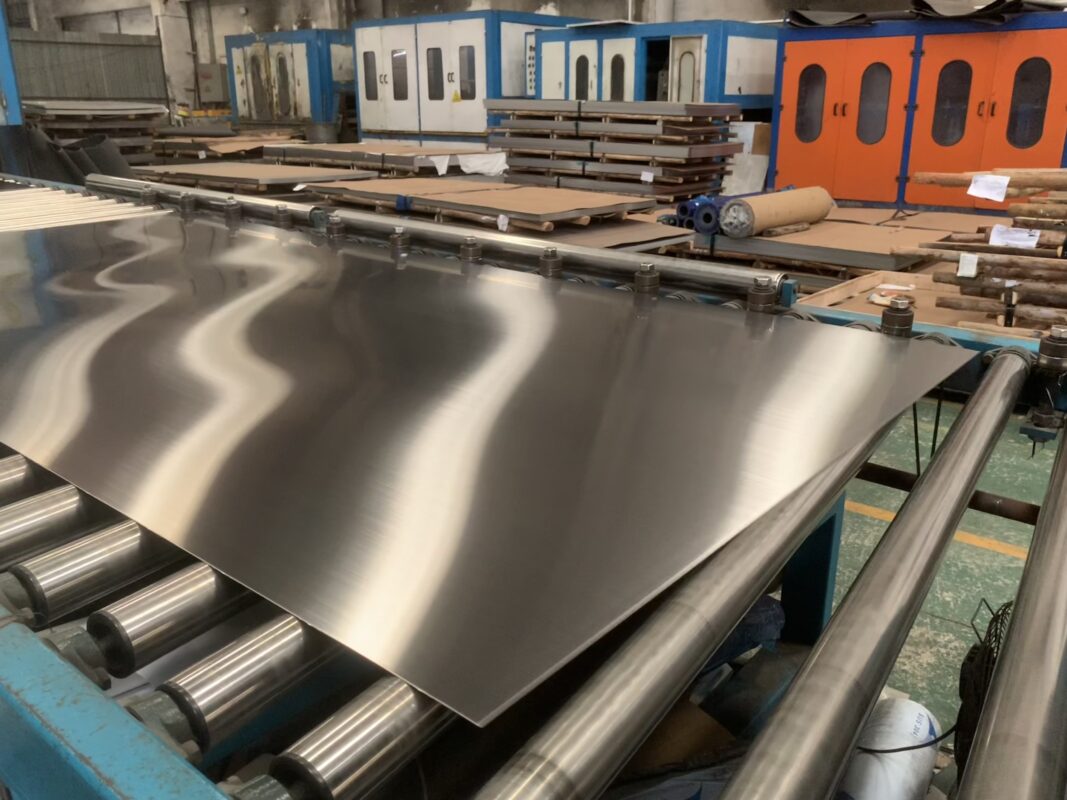
Brushed stainless steel sheets are among the most versatile and widely used decorative surfaces in the global architecture and interior design industry. The brushed finish, known in the industry as No.4 finish or hairline (HL) finish, is characterized by fine, unidirectional grain lines created by mechanical abrasion. Unlike the high reflectivity of mirror finishes, brushed surfaces offer a softer, more subtle aesthetic that balances visual appeal with practical durability.
This guide provides a comprehensive overview of brushed stainless steel sheets—covering their popularity, application scenarios, advantages, pricing, and target audiences for international buyers.
Why Brushed Finish Is the Most Popular Choice
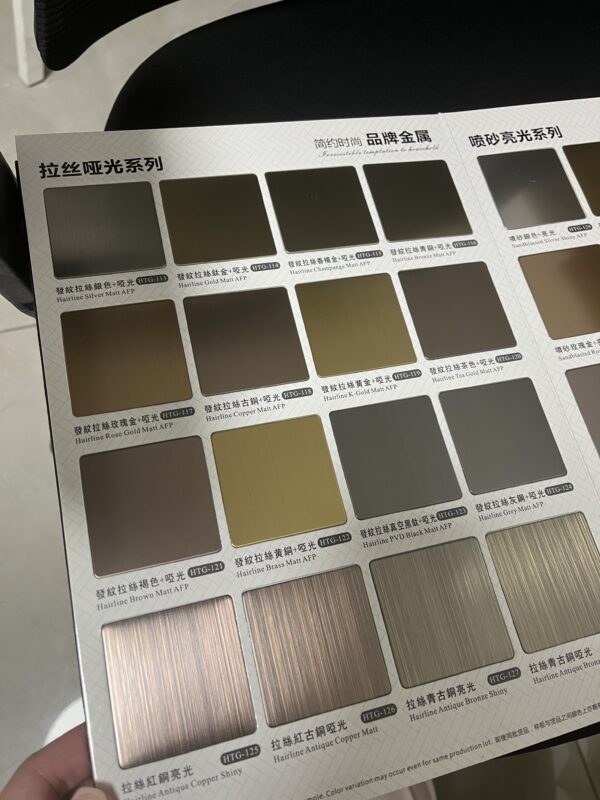
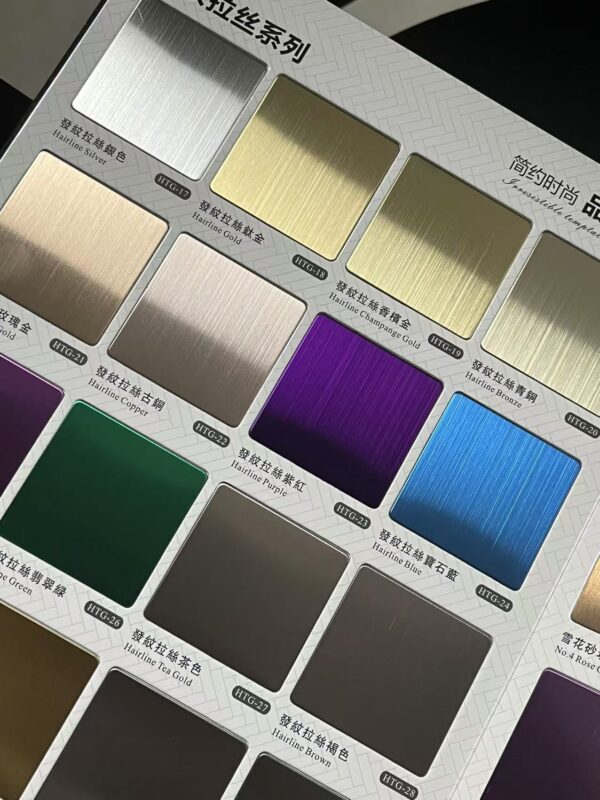
Among all decorative stainless steel finishes, brushed consistently ranks as the most popular surface treatment in the industry today. Its widespread adoption stems from a combination of visual appeal, practical performance, and cost-effectiveness.
Key reasons for its popularity:
-
Subtle, sophisticated appearance: Unlike mirror finishes, brushed surfaces are less shiny and create a “soft and stable” visual effect that fits modern interior design. This understated elegance makes it suitable for luxury interiors that prefer calm, contemporary styles.
-
Practical durability: Brushed stainless steel sheets are more wear-resistant than ordinary bright stainless steel. The fine grain pattern helps hide minor scratches and daily wear, making them ideal for high-traffic areas.
-
Better fingerprint resistance: Compared to mirror finishes, brushed surfaces show fewer fingerprints, significantly reducing maintenance requirements in frequently touched areas such as elevator interiors and corridor wall panels.
-
Cost-effective decorative solution: While brushed finish costs more than standard 2B industrial finish, it remains significantly more economical than mirror (8K) finishes. This makes brushed finish the preferred choice for projects that need a premium appearance without the high cost of mirror polishing.
Brushed vs. Hairline: Understanding the Terminology
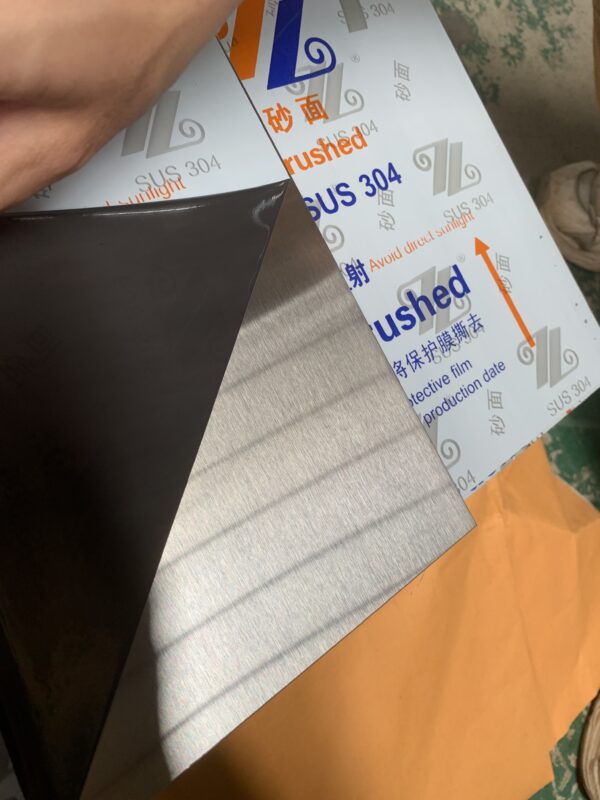
International buyers should be aware that “brushed” and “hairline” are often used interchangeably, though they have subtle differences:
| Term | Description | Grain Type |
|---|---|---|
| Brushed (No.4) | Unidirectional finish created with 100-400 grit abrasives; coarser grain, slightly more textured | Short grain / random |
| Hairline (HL) | Fine, long linear grain with uniform texture; more elegant and refined appearance | Long straight grain |
| Satin Finish | Similar to hairline but more reflective and less textured | Medium grain |
For practical sourcing purposes, most buyers use “brushed” as the general term covering both No.4 and HL finishes. When specifying, confirm with your supplier which exact finish code (No.4 or HL) matches your project requirements.
Application Scenarios: Where Brushed Stainless Steel Shines
Brushed stainless steel sheets are used across a wide range of industries and applications due to their balance of aesthetics, durability, and cost.
Elevator and Escalator Interiors
Elevator cabins are among the most common applications for brushed stainless steel. The finish creates a professional, clean appearance while resisting fingerprints from daily passenger contact. Brushed sheets are widely used for:
-
Elevator interior wall panels
-
Elevator door frames and door panels
-
Elevator ceiling tiles
-
Escalator exterior panels
For example, a commercial office building elevator receives hundreds of daily touches. Brushed finish panels maintain a clean appearance between cleanings, unlike mirror finishes that require frequent wiping.
Hotel and Hospitality Projects
Hotel designers favor brushed stainless steel for its ability to combine luxury with practicality. Common applications include:
-
Hotel lobby feature walls and columns
-
Corridor wall panels (accounting for approximately 35% of architectural decoration market share for black brushed)
-
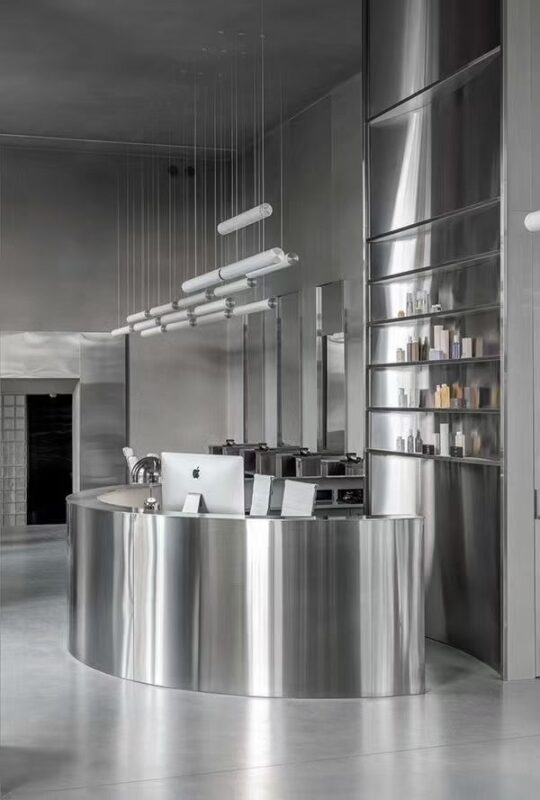
Bar counters and reception desks
-
Room dividers and ceiling decorations
For example, brushed stainless steel sheets are widely used in hotel corridors and door frames because they create a “soft and stable visual effect” while withstanding daily cleaning and guest traffic.
Commercial Kitchen and Food Service
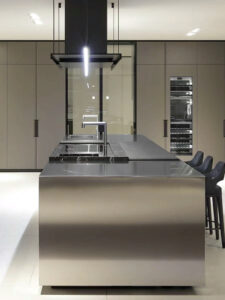
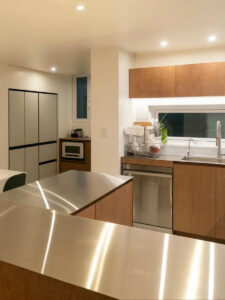
The brushed finish is standard in commercial kitchens because it:
-
Meets food hygiene standards
-
Hides water spots and grease smudges
-
Withstands frequent cleaning with mild detergents
-
Matches professional kitchen aesthetic
Villa and Luxury Residential
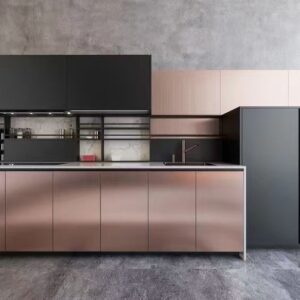
High-end residential projects use brushed stainless steel for:
-
Kitchen backsplashes and cabinet fronts
-
Interior feature walls
-
Staircase railings and balustrades
-
Door and window frames
Commercial and Office Buildings
Brushed stainless steel is specified for commercial applications due to its professional appearance and low maintenance:
-
Office lobby walls and reception desks
-
Commercial furniture surfaces
-
Column cladding and curtain wall decoration
Popular Markets for Brushed Stainless Steel
Based on industry sourcing patterns, brushed stainless steel sheets from China are exported to markets worldwide, with particularly strong demand from:
North America (USA and Canada)
The North American market is a major destination for brushed stainless steel products. Demand is driven by:
-
Luxury hotel renovations: Las Vegas, New York, Miami, and Los Angeles hospitality projects specify brushed finishes for elevators and corridors
-
Commercial construction: Office towers and retail centers seeking professional, low-maintenance surfaces
-
Residential projects: Growing preference for modern, clean aesthetics
Europe
European buyers appreciate brushed stainless steel for:
-
Premium interior design: German, French, and Italian designers specify brushed finishes for luxury projects
-
Sustainability: Stainless steel’s recyclability and durability align with European green building standards
-
Practicality: The British Stainless Steel Association notes that brushed finishes “may be a better choice than ground or polished for preventing fingermarking”
Middle East
The Middle East is a growing market for decorative stainless steel, with strong demand from:
-
Luxury hotel and resort developments: Dubai, Abu Dhabi, and Doha hospitality projects
-
High-end residential developments: Premium finishes are standard
-
Architectural statement pieces: Bold designs for iconic buildings
Asia-Pacific
-
Australia: High-end residential and commercial projects
-
Southeast Asia: Growing adoption in hotel and commercial construction
-
Japan and South Korea: Quality-conscious buyers with stable demand
Advantages of Brushed Stainless Steel Sheets
Aesthetic Advantages
1. Subtle, Elegant Appearance
The brushed finish delivers a matte, sophisticated look that is less aggressive than mirror finishes. “Compared with mirror finishes, brushed surfaces look more subtle and stable. This makes them suitable for luxury interiors that prefer a calm and modern style”.
2. Versatile Visual Compatibility
Brushed stainless steel blends seamlessly with various design styles. Chinese manufacturers describe it as “one of the iconic materials for high-end projects” with “understated and luxurious texture” that works with diverse architectural styles.
3. Hide Minor Surface Imperfections
Unlike mirror finishes, brushed surfaces do not show every tiny scratch or watermark. The grain pattern breaks up visible marks, keeping the material looking fresh with less effort.
Functional Advantages
1. Superior Wear Resistance
Brushed stainless steel plates “are not afraid of scratches” and can “withstand daily wear and tear,” making them ideal for high-traffic areas.
2. Better Fingerprint Resistance
The fine grain pattern makes fingerprints and smudges less visible than on mirror finishes. “Brushed finishes may be a better choice than ‘ground’ or ‘polished’ for preventing fingermarking,” according to the British Stainless Steel Association.
3. Lower Maintenance
The brushed finish reduces the frequency of cleaning required to maintain an acceptable appearance. Routine cleaning with mild detergents and adequate rinsing is normally sufficient.
4. Corrosion Resistance
When specified in 304 or 316 grades, brushed stainless steel sheets offer excellent corrosion resistance. 304 contains 18% chromium and 8% nickel as core components, effectively resisting corrosion from most inorganic acids and salt solutions.
5. Cost-Effective Decorative Solution
Hairline/brushed finish offers “an ideal balance between cost, durability, and decorative performance.” While its processing cost is higher than standard 2B finish, it “remains significantly more economical than mirror finishes”.
Pricing Analysis: What Affects Brushed Stainless Steel Cost?
Price Comparison by Finish Type
The stainless steel 304 sheet price varies significantly depending on surface finish. The typical price relationship is:
| Finish | Relative Cost Level |
|---|---|
| 2B (Standard industrial) | Lowest |
| BA (Bright annealed) | Medium |
| Brushed / Hairline (No.4 / HL) | High |
| Mirror (8K) | Highest |
Key Insight: “No.4 brushed sheets typically command the highest premium” among common finishes. However, the brushed finish is still significantly more affordable than mirror polishing, making it “cost-effective for decorative use, offering premium appearance without the high cost of mirror polishing”.
Factors Affecting Brushed Stainless Steel Price
The brushed stainless steel sheet price is influenced by several factors:
1. Base Material Grade
-
304: Most widely used, cost-effective for indoor use
-
316/316L: Recommended for outdoor or corrosive environments; higher cost
-
201: Lower cost, suitable for budget indoor projects
-
430: Cost-effective ferritic option for appliance and decorative parts
2. Thickness
-
Thicker sheets increase grinding difficulty and cost
-
Common thickness range: 0.4mm–3.0mm
-
Standard residential: 0.8mm–1.0mm; commercial: 1.0mm–1.5mm
3. Finish Specification
-
No.4 brushed (short grain): Slightly lower cost than HL
-
Hairline (HL) (long grain): Requires consistent grain direction and precision
4. Order Volume
-
Bulk pricing available for large orders
-
MOQ typically 10 sheets; container orders preferred
5. Protective Film and Packaging
-
Decorative finishes require thicker film and cleaner application conditions, adding cost
-
Export packaging: wood crates, paper interleaving, edge protection
Typical Price Ranges
Based on Chinese market data (pricing from 2026):
| Product | Price Range (USD equivalent) |
|---|---|
| 304 0.8mm No.4 brushed | ~$1.25–2.25/kg |
| 304 1.5mm HL brushed | ~$2.25–3.50/kg |
| 201 brushed (indoor only) | ~$0.50–1.00/kg less than 304 |
| Batch orders (100+ sheets) | Discount of ~$0.10–0.15/kg |
Reference: Standard brushed sheets (0.5mm, 4×8, 304) from China FOB typically range from **$25–45 per sheet**, depending on color and quantity. This compares to US distributor pricing of $300–500+ per sheet for similar products.
Target Audience Analysis: Who Buys Brushed Stainless Steel?
Understanding your buyer personas helps tailor content and sales approaches:
By Role
| Buyer Type | Decision Factors | Typical Order Size |
|---|---|---|
| Hotel Procurement Manager | Durability, maintenance cost, brand alignment | 500–2,000 sheets per project |
| Interior Designer | Visual impact, sample availability, customization | 100–500 sheets (project-dependent) |
| Elevator Manufacturer | Consistency, grain direction, delivery reliability | 200–800 sheets/month (recurring) |
| Architect | Design flexibility, material specification, technical support | 300–1,500 sheets per commercial project |
| Commercial Kitchen Contractor | Hygiene standards, scratch resistance, ease of cleaning | 100–500 sheets |
| Villa Owner / Homeowner | Premium appearance, budget, low maintenance | 20–100 sheets |
| Distributor / Importer | Price, consistency, stock availability | 1,000–5,000 sheets per order |
By Region
| Region | Key Characteristics |
|---|---|
| North America | High quality standards, design-driven, fast shipping requirements |
| Europe | Sustainability-focused, value quality over price, design-led |
| Middle East | Premium projects, willing to pay for quality finishes |
| Asia-Pacific | Cost-sensitive, growing adoption in commercial and residential |
Quality Considerations for Buyers
What to Check Before Ordering
| Quality Factor | What to Verify |
|---|---|
| Grain direction consistency | Confirm uniform grain orientation; mismatched grain is a common issue |
| Finish specification | No.4 (short grain) vs. HL/Hairline (long grain); confirm exact code |
| Base material grade | 304/316L certification; material test certificates available |
| Thickness tolerance | Typically ±0.03mm; confirm project requirements |
| Protective film quality | Ensure adequate protection for shipping; decorative finishes require thicker film |
| Anti-fingerprint coating | Optional coating available for extra protection (+$0.06–0.10/kg) |
| Packaging | Edge protection, interleaving paper, wooden crates for sea freight |
Common Mistakes to Avoid
-
Not confirming grain direction — Panels with mismatched grain cannot be used together
-
Ordering insufficient spare material — Matching grain and color across batches is difficult
-
Specifying brushed for wrong environment — 316 grade needed for coastal/exterior, not 304
-
Not requesting samples — Photos cannot show grain texture accurately
-
Leaving protective film too long — Film degradation may damage surface
Cleaning and Maintenance
Proper care extends the life of brushed stainless steel surfaces:
Do:
-
Clean with mild soap and warm water
-
Wipe in the direction of the grain
-
Rinse thoroughly and dry to prevent water spots
Do not:
-
Use abrasive cleaning materials that may harm the finish
-
Clean against grain direction (will create visible marks)
-
Use stainless steel polish on textured surfaces (may fill grain pattern)
For high-touch areas: The British Stainless Steel Association notes that “either spray polishes or rubbing with ‘baby oil’ can be useful in suppressing fingermarking”.
Frequently Asked Questions
Q: What is the difference between brushed (No.4) and hairline (HL) finish?
A: No.4 brushed has a coarser, shorter grain texture suitable for kitchen equipment and general decorative use. Hairline (HL) features fine, long, continuous linear grain ideal for elevator panels and high-end interiors. Both are often referred to as “brushed” in the industry.
Q: Which stainless steel grade is best for brushed decorative sheets?
A: 304 stainless steel is standard for most indoor applications. 316/316L is recommended for coastal areas, exterior use, or high-humidity environments.
Q: Is brushed stainless steel resistant to fingerprints?
A: Brushed finishes show fingerprints less than mirror finishes, though not completely fingerprint-proof. For extra protection, specify anti-fingerprint coating.
Q: Can brushed stainless steel be used outdoors?
A: Yes, but only with 316 grade (marine grade). Standard 304 brushed stainless steel will corrode in coastal or high-moisture environments.
Q: How should I specify brushed stainless steel to my supplier?
A: Specify grade (304/316), finish (No.4 or HL), thickness, grain direction, protective film requirement, and whether anti-fingerprint coating is needed.
Q: Is brushed stainless steel more expensive than standard finishes?
A: Yes. Brushed finish costs more than 2B but is significantly cheaper than mirror finish. It offers the best balance of cost, durability, and decorative performance.
Conclusion
Brushed stainless steel sheets represent the most popular decorative surface solution in the global architectural and interior design industry. Their combination of subtle elegance, practical durability, and cost-effectiveness makes them the preferred choice for hotels, elevators, commercial kitchens, luxury residences, and commercial buildings.
The United States, Europe, the Middle East, and Asia-Pacific are key export markets. Hotel procurement managers, interior designers, elevator manufacturers, architects, commercial kitchen contractors, and distributors are the primary buyer personas driving demand.
Chinese manufacturers offer compelling advantages: extensive finish options (No.4, HL, satin), competitive pricing ($25–45 per sheet for standard 0.5mm 4×8 304 brushed), established quality certifications, and reliable supply chains with MOQs starting at 10 sheets.
For most projects, 304 grade with brushed finish (No.4 or HL) delivers the optimal balance of appearance, durability, and cost. Specify 316 grade for coastal or exterior applications. Confirm grain direction, protective film requirements, and anti-fingerprint coating options with your supplier before ordering.