

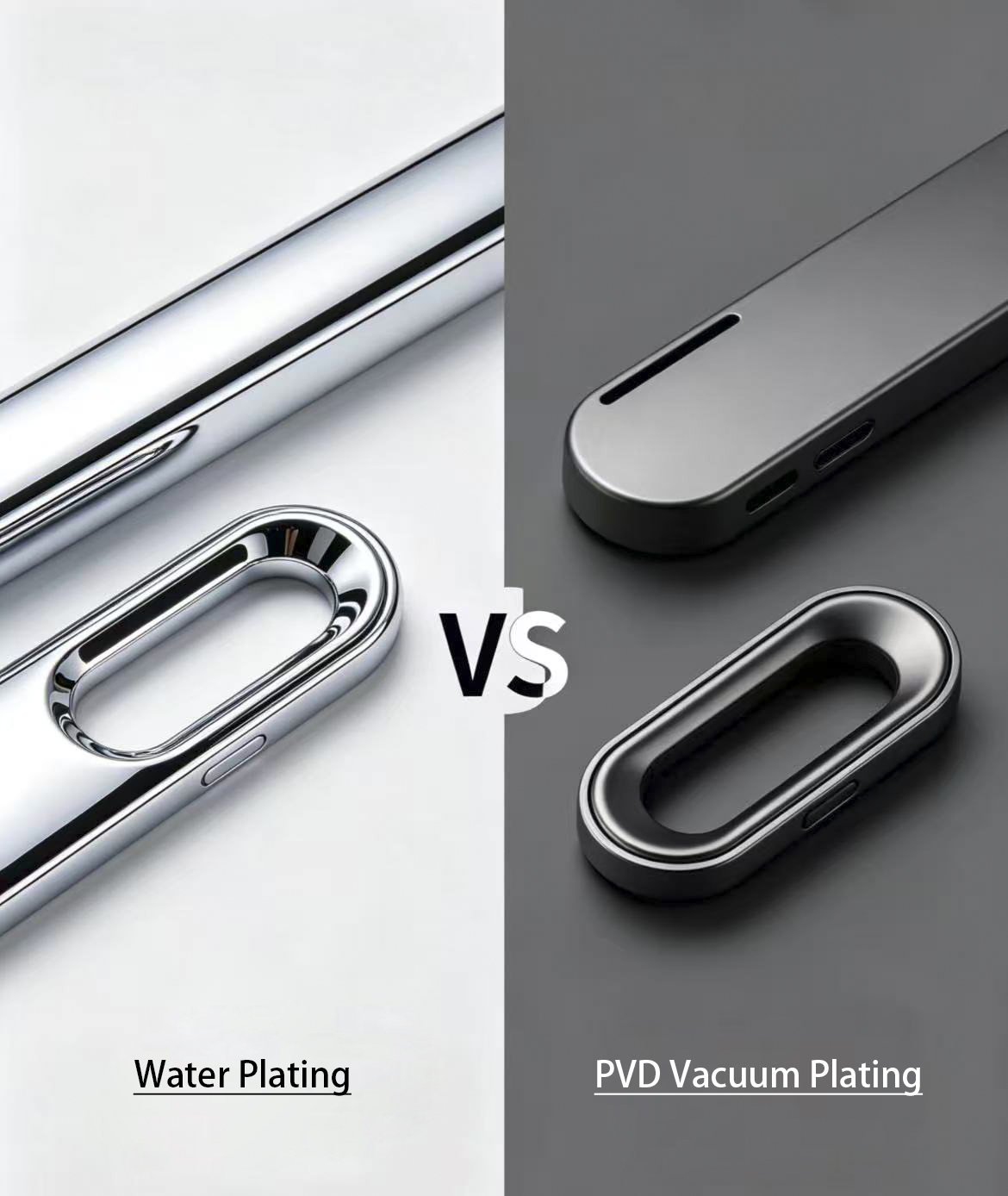
PVD vs Water Plating on Stainless Steel: A Comprehensive Comparison for Buyers
When sourcing colored stainless steel decorative sheets, buyers face a critical decision: PVD vacuum plating or water plating (electroplating)? Both processes add color and visual appeal, but they differ significantly in terms of durability, appearance, cost, and application suitability.
Choosing the wrong finish can lead to premature fading, costly replacements, and disappointed clients. Therefore, understanding the differences between PVD and water plating is essential for procurement professionals, interior designers, and contractors.
Part 1: What Are PVD and Water Plating?
PVD Vacuum Plating
PVD, or Physical Vapor Deposition, is a vacuum-based process that vaporizes solid metal materials—typically titanium, zirconium, or chromium—into a plasma of atoms and deposits them onto the stainless steel surface. This occurs inside a vacuum chamber at relatively low temperatures.

Key characteristics:
-
Coating bonds at the ionic level with the substrate
-
Coating thickness: 0.3–5 micrometers
-
Zero liquid effluent; environmentally friendly
-
RoHS and REACH compliant
The stainless steel surface does not chemically change during PVD. Instead, the coating adds a durable, decorative, and functional layer.
Water Plating (Electroplating)
Water plating is a chemical wet-plating process where metal ions are deposited onto the stainless steel surface through an electrolyte solution. An electric current passes through the solution, causing dissolved metal ions to adhere to the steel.

Key characteristics:
-
Takes place in liquid chemical baths
-
Coating thickness: 5–50 micrometers
-
Generates wastewater containing heavy metals
-
Physical overlay, not ionic bond
Water plating remains a cost-effective option for specific applications, but its technical limitations are significant.
Part 2: How Do Their Color Ranges Compare?
PVD technology supports a wide spectrum of stable and durable colors, including gold, rose gold, champagne, bronze, coffee, sapphire blue, emerald green, black, and customized options.
Water plating, however, has severe limitations. The chemical process cannot maintain stable ion deposition for most tones. For example, gold, rose gold, blue, or rainbow finishes fade quickly and cannot pass durability standards.
Water plating can only reliably produce two colors:
-
Copper color (antique copper, rose copper variations)
-
Black titanium
Even with black titanium, the appearance differs—water plating yields a deeper, more saturated black, whereas PVD black titanium appears lighter and more reflective.
Therefore: For any color other than copper or black titanium, PVD is necessary.


Part 3: Performance and Durability Comparison
Hardness and Wear Resistance
PVD coatings are significantly harder than water-plated finishes. Laboratory tests show PVD micro-hardness reaching 2,200–3,500 HV, compared to 200–400 HV for water plating. As a result, PVD offers 5 to 10 times better wear resistance.
Corrosion Resistance
PVD coatings provide excellent corrosion protection, with salt spray resistance (ASTM B117) typically reaching 500–1,200 hours. Water plating, in contrast, generally lasts only 24–48 hours before showing signs of corrosion.
Therefore: For coastal environments, outdoor installations, or high-humidity areas, PVD is strongly recommended.
Color Consistency
PVD ensures color uniformity with a ΔE value of ≤1.0—visually imperceptible variation across large panels. Water plating, however, often shows patchiness and color inconsistency, especially on larger sheets.
Adhesion Strength
PVD forms an ionic bond with the stainless steel substrate, eliminating the risk of peeling. Water plating is a physical overlay and can peel or blister over time.
Lifespan Comparison
Indoors, PVD typically lasts 5–10 years or more. Water plating fades noticeably within 2–3 years. Outdoors, PVD performs well with proper 316-grade substrate; water plating is not recommended.
Part 4: Price and Cost Analysis
Upfront Cost
PVD vacuum plating is more expensive than water plating. Typical pricing ranges are:
-
Water plating: approximately $20–35 per square meter
-
PVD vacuum plating: approximately $50–85 per square meter
Total Cost of Ownership
For commercial projects—hotels, elevators, office buildings—long-term value matters more than upfront cost. Consider a 1,000 m² hotel panel project:
| Cost Factor | Water Plating | PVD |
|---|---|---|
| Upfront coating cost | $25,000–35,000 | $50,000–85,000 |
| Expected lifespan | 2–3 years | 5–10+ years |
| Replacement cost per cycle | $25,000–35,000 | None |
| Labor and business disruption | High | None |
Over a 10-year period, water plating requires 3–4 replacements, making it more expensive than choosing PVD initially. Therefore: For high-traffic commercial and luxury applications, PVD offers better long-term value.
Part 5: Which Products Use PVD vs Water Plating?
Products That Typically Use PVD Vacuum Plating
PVD is the industry standard for most architectural and decorative applications where quality and longevity are required. Common products include:
-
Architectural panels: Hotel lobby walls, elevator interiors, column cladding
-
Architectural hardware: Door handles, hinges, locks, pull handles
-
Bathroom fittings: Tapware, shower heads, towel rails
-
Signage: Corporate logos, wayfinding systems, exterior signage
-
Elevator components: Cabin panels, door frames, control panels
-
Furniture: Luxury furniture frames, table bases, cabinet hardware
Products That Typically Use Water Plating
Water plating is used almost exclusively for two specific applications:
-
Copper color finishes: Antique copper, rose copper decorative panels—especially where a “仿古做旧” (aged/antique) effect is desired
-
Black titanium panels: Where a deep, true black appearance is essential
For most other decorative purposes, designers and architects prefer PVD because it offers better scratch resistance, color consistency, and significantly better long-term durability.
Part 6: When to Choose PVD—and When to Choose Water Plating
Choose PVD When:
| Condition | Reasoning |
|---|---|
| Any color other than copper or black titanium | PVD supports stable colors across the full spectrum |
| High-traffic commercial interiors (hotels, elevators) | PVD offers superior wear and scratch resistance |
| Outdoor or coastal installations (with 316 base) | PVD provides excellent corrosion resistance |
| Projects requiring 5–10+ years of color stability | PVD lasts significantly longer |
| Color consistency across large areas | PVD ensures uniform appearance |
| Environmental certification (LEED, RoHS) | PVD is a green technology with zero liquid effluent |
Choose Water Plating When:
| Condition | Reasoning |
|---|---|
| You specifically need copper or black titanium color | These are the only two colors water plating can reliably produce |
| Budget is the primary constraint | Water plating costs 40–60% less upfront |
| The installation is for non-public areas | Shorter lifespan is acceptable |
| Color life of 2–3 years is sufficient | Water plating meets this requirement |
Frequently Asked Questions
Q: Can water plating produce gold or rose gold finishes?
A: No. Gold and rose gold are chemically unstable under water plating processes and fade quickly.
Q: Which finish is more environmentally friendly?
A: PVD is significantly more environmentally friendly. It generates no liquid effluent or hazardous waste. Water plating produces wastewater containing heavy metals and chemicals.
Q: Is water-plated stainless steel suitable for outdoor projects?
A: Not recommended. Water plating lacks the corrosion resistance and UV stability required for exterior applications.
Q: Why do designers and architects prefer PVD?
A: Because PVD offers better scratch resistance, better color consistency, and significantly better long-term durability.
Conclusion
PVD and water plating serve different market segments. PVD is the premium solution for architects, designers, and procurement professionals who value long-term durability, color consistency, and environmental compliance. Water plating remains a cost-effective option for specific niche applications where copper or deep black titanium finishes are required and budget is the primary consideration.
When in doubt: Choose PVD. It delivers better performance, lasts longer, and provides a higher return on investment for commercial and luxury projects.