

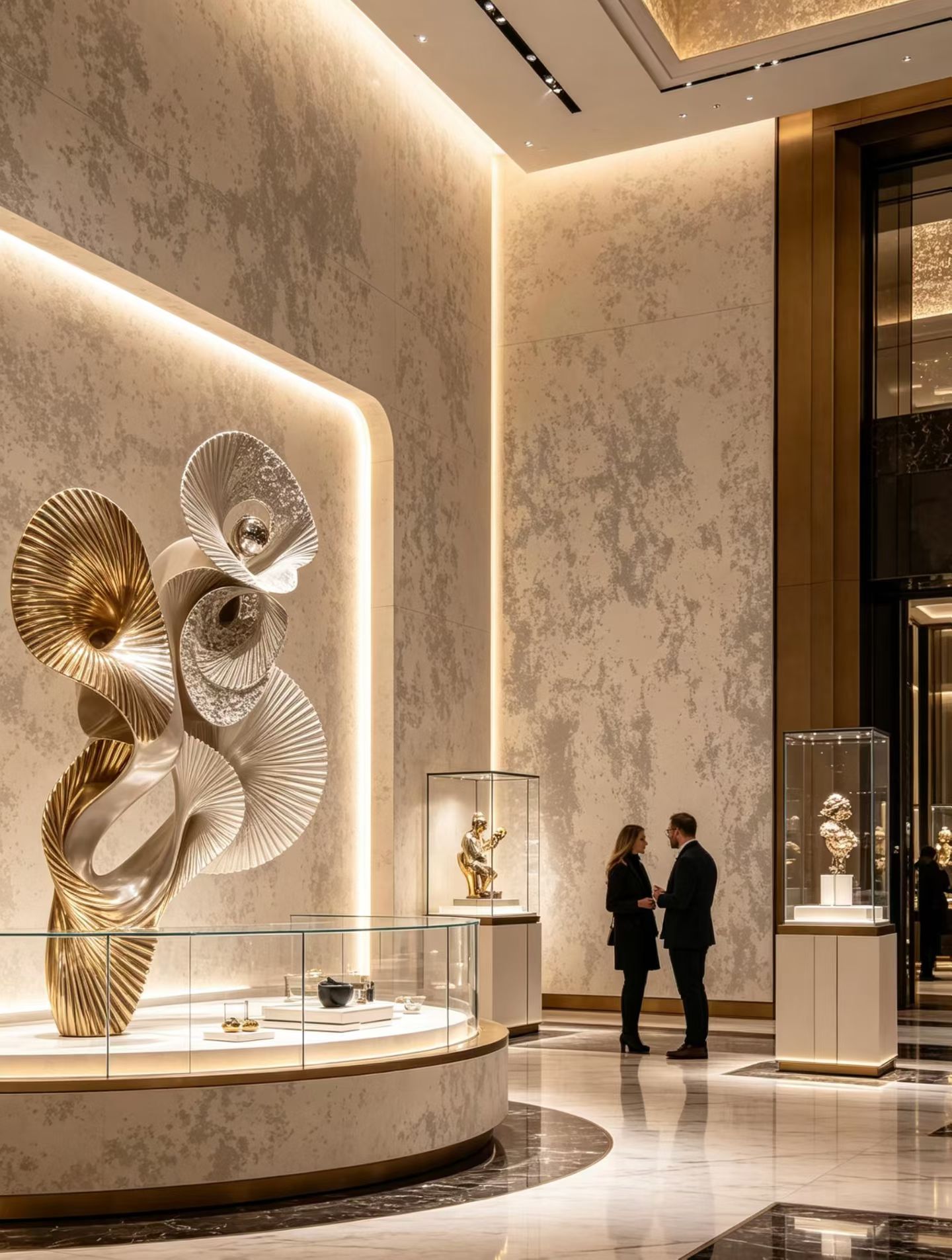
The hospitality industry has witnessed a significant shift in material preferences over recent years. High-end hotels are increasingly moving away from sleek, high-gloss surfaces toward materials that tell a story. Therefore, the aged stainless steel finish(antique stainless steel) has emerged as a top choice for boutique hotels, luxury resorts, and design-led hospitality projects.
For example, Rocabella, a landmark residential and hospitality project on Australia’s Gold Coast, uses the Antique Collection by ABI Interiors throughout its interiors. The developer specifically selected aged finishes because, in their words, “I don’t like anything too shiny, too glossy, so the aged finish really suited the style”.
Consequently, understanding why aged stainless steel finish resonates with hotel designers helps you position this product effectively to hospitality buyers.
Internal Link (Dofollow): For an overview of all surface types, see our Stainless Steel Decorative Sheet Surface Guide.
Part 1: Design Advantages of Aged Stainless Steel Finish
It Creates “Authored” Rather Than “Assembled” Spaces
The modern hotel guest has evolved. Generic, cookie-cutter interiors no longer impress. Today’s luxury traveler responds to spaces that feel curated, intentional, and layered with character. Therefore, aged stainless steel finish has become a designer’s tool for creating what hospitality experts call “authored” interiors—spaces that feel designed rather than assembled.
For instance, a hotel lobby featuring aged stainless steel wall panels immediately communicates attention to detail. The vintage surface suggests history and craftsmanship, even in a brand-new building. As a result, guests perceive the entire property as more thoughtful and premium.
It Offers a Point of Differentiation
In a competitive market, hotel owners need visual elements that set their property apart. Mirror and brushed stainless steel finishes are everywhere. Aged finishes are still relatively uncommon. Consequently, specifying aged stainless steel creates instant differentiation.
For example, the Antique Collection’s warm bronze and copper tones offer alternatives to standard metallic finishes. These finishes include Antique Aurum, Antique Steel, Antique Bronze, and Antique Slate—each providing a distinct vintage character.
It Complements Other Natural Materials
Aged stainless steel works exceptionally well alongside natural materials. For instance, the Rocabella project paired Antique Bronze tapware with Silver Travertine and textured render. The combination created what designers describe as “a layered material narrative”—the kind of tactile detailing that guests notice and remember.
Therefore, aged stainless steel finish serves as an anchor for broader material palettes. It grounds other elements without competing for attention.
Part 2: Visual Advantages of Aged Stainless Steel Finish
Warm, Inviting Aesthetic
Unlike the cool, clinical feel of standard mirror stainless steel, aged finishes deliver warmth. The antique copper or bronze tones create a softer, more welcoming atmosphere. For example, a restaurant with aged copper stainless steel panels feels more intimate and approachable than one with high-gloss surfaces.
Key visual characteristics:
-
Warm bronze or copper tones
-
Muted reflectivity (no harsh glare)
-
Organic, textured surface appearance
-
Rich depth and visual dimension
It Tells a Story of Heritage and Craftsmanship
The aged stainless steel finish mimics metals that have weathered over decades or even centuries. For instance, some antique finishes use chemical processes to replicate the green patina or warm brown mottled effect of naturally aged copper.
Consequently, the finished surface carries emotional weight. It evokes history, tradition, and permanence. For luxury hotels seeking to convey enduring quality, this psychological association is valuable.
Random Patterns Create Uniqueness
Unlike unidirectional brushed finishes that look identical across large areas, aged finishes often feature irregular, random patterns. For example, antique copper sheets may show variegated textures and mottled colors, with no two sections appearing exactly alike.
Therefore, aged stainless steel finish delivers visual interest that standard finishes cannot match. The surface rewards close inspection, engaging guests who appreciate design details.
It Handles Lighting Beautifully
Aged finishes interact with light differently than shiny surfaces. Rather than creating harsh reflections, they absorb and soften light. As a result, hotel spaces feel more comfortable and less clinical.
For instance, an elevator interior finished in aged stainless steel will not produce uncomfortable glare under overhead lighting. The muted surface creates a warm, flattering ambiance that guests appreciate.
Part 3: Quality and Performance Advantages of Aged Stainless Steel Finish
Superior Durability Compared to Real Vintage Metals
Traditional aged metals—copper, brass, bronze—require ongoing maintenance. Natural copper oxidizes and changes color over time. It requires regular polishing with specialized cleaners to maintain its appearance. On the other hand, aged stainless steel delivers the same visual effect with vastly superior stability.
Quality comparison:
| Material | Corrosion Resistance | Maintenance Requirement | Lifespan |
|---|---|---|---|
| Aged Stainless Steel | Excellent (304/316 grade) | Low—wipe clean only | Decades |
| Natural Copper | Moderate—oxidizes | High—regular polishing required | Variable |
| Unlacquered Brass | Low—tarnishes | High—frequent polishing | Variable |
Therefore, hotel owners can achieve the vintage aesthetic without the maintenance burden.
PVD Coating Ensures Long-Lasting Color
Most aged stainless steel finishes use Physical Vapor Deposition (PVD) coating technology. This process applies a thin, hard-wearing layer of color to the stainless steel surface. Consequently, the finish resists fading, scratching, and corrosion for years.
For example, the ABI Interiors Antique Collection uses PVD coating on most of its finishes, providing lasting protection against tarnishing and wear. The company backs this with a 25-year warranty. Therefore, hotel procurement managers can specify aged finishes with confidence.
304 and 316 Grades Provide Corrosion Protection
Aged stainless steel sheets typically use 304 or 316 stainless steel as the base material. 316 grade, with its molybdenum content, offers exceptional corrosion resistance—particularly important for coastal hotels or high-humidity environments.
For instance, antique stainless steel used in hotel lobbies, corridors, and elevator interiors can withstand daily cleaning, fingerprints, and incidental impact without showing wear.
ROHS Compliance Ensures Environmental Safety
Beyond durability and aesthetics, high-end hotel projects increasingly require environmental compliance. Our aged stainless steel finish sheets are ROHS certified, meaning they contain no hazardous substances such as lead, mercury, cadmium, or hexavalent chromium.
For example, international hotel chains often mandate ROHS compliance for interior materials, particularly in enclosed spaces like elevator cabins and guest rooms. Therefore, specifying ROHS-certified aged stainless steel simplifies the procurement process and ensures project approval.

It Hides Wear and Tear Naturally
One of the most practical advantages of aged stainless steel finish is its ability to hide everyday wear. For example, minor scratches, fingerprints, and smudges blend into the aged surface rather than standing out conspicuously.
Therefore, aged finishes are inherently low-maintenance. A hotel lobby using aged stainless steel wall panels will not require daily wiping to maintain appearance—unlike mirror stainless steel, which shows every fingerprint instantly.
Sustainable and Environmentally Responsible
Aged stainless steel sheets are also an environmentally responsible choice. Stainless steel is fully recyclable, with a recycling rate exceeding 90%. For example, the antique copper finish uses only a micron-thick copper coating on a stainless steel base, reducing copper consumption by approximately 70% compared to solid copper panels.
Consequently, hotels pursuing green building certifications can specify aged stainless steel with confidence. The European Union has even included similar products in its “Green Building Materials Certification System”.
Application Spotlight: Where Aged Stainless Steel Shines in Hotels
Lobby Feature Walls
The hotel lobby creates the first guest impression. Aged stainless steel feature walls signal quality, craftsmanship, and attention to detail.
For example, a property might use antique copper stainless steel panels behind the reception desk or as a dramatic arrival wall. The warm, vintage character immediately differentiates the property from competitors using standard finishes.
Elevator Interiors
Elevators are confined spaces that guests experience multiple times daily. Aged stainless steel elevator interiors transform utilitarian cabins into design moments.
For instance, antique finish stainless steel panels create a warm, luxurious ambiance that feels more inviting than standard mirror or brushed finishes.
Restaurant and Bar Surfaces
Hotel restaurants and bars benefit from the aged aesthetic’s warmth and character. For example, antique stainless steel bar fronts, tabletops, or feature walls create the authentic industrial-vintage atmosphere that modern diners seek.
Corridor Wall Protection
Hotel corridors see constant traffic from housekeeping carts and guest luggage. Aged stainless steel wall panels or wainscoting provide durable protection while contributing to the property’s design narrative.
Feature Ceilings
Some hotels use aged stainless steel for ceiling applications. The muted reflectivity and warm tones add unexpected luxury overhead.
Comparison with Other Finishes for Hotel Applications
| Finish Type | Visual Character | Maintenance Needs | Durability | Best For |
|---|---|---|---|---|
| Aged Stainless Steel | Warm, vintage, layered | Low | High | Lobbies, elevators, bars |
| Mirror Stainless Steel | Bright, dramatic, modern | High (shows everything) | Moderate | Feature walls in low-touch areas |
| Brushed Stainless Steel | Clean, practical, neutral | Moderate | High | Corridors, back-of-house |
| Natural Copper/Brass | Authentic vintage | Very high (tarnishes) | Moderate | Accents with dedicated maintenance |
Therefore, aged stainless steel occupies a unique position: it delivers vintage character without the maintenance liability of genuine antique metals.
Frequently Asked Questions About Aged Stainless Steel for Hotels
Q: Does aged stainless steel require special maintenance in hotel environments?
A: No. Clean with mild soap and a soft cloth, wiping in the grain direction. Avoid abrasive cleaners or stainless steel polish, which could remove the patina. Therefore, housekeeping teams can maintain aged finishes with standard cleaning protocols.
Q: Can aged stainless steel be used in high-traffic hotel areas?
A: Yes. The 304 or 316 stainless steel base provides excellent resistance to corrosion, scratches, and wear. PVD coatings add additional protection against fading and damage. For example, many hotels use aged stainless steel in lobbies and corridors with no performance issues.
Q: Is aged stainless steel appropriate for outdoor hotel applications?
A: Yes, but specify 316 grade stainless steel for coastal or exterior applications. 316 contains molybdenum, which provides superior resistance to chloride corrosion.
Q: Will the aged appearance change over time?
A: With quality PVD coating, the color remains stable for years. Without coating, the patina may continue to develop. Therefore, confirm with your supplier whether clear coating is included or recommended.
Q: How does aged stainless steel compare to solid copper in cost?
A: Aged stainless steel is significantly more cost-effective. It uses only a micron-thick copper coating on a stainless steel base, reducing material cost while providing comparable visual impact.
Conclusion
The aged stainless steel finish has become a material of choice for high-end hotel projects because it delivers what modern luxury hospitality demands: character, durability, and authenticity.
Design advantages:
-
Creates “authored” interiors that feel curated rather than assembled
-
Differentiates properties from competitors
-
Complements natural materials like stone and wood
Visual advantages:
-
Delivers warm, inviting bronze and copper tones
-
Tells a story of heritage and craftsmanship
-
Provides unique, irregular patterns that reward close inspection
Quality advantages:
-
Outperforms natural copper and brass in durability
-
PVD coating ensures lasting color with 25-year warranties available
-
304 and 316 grades provide corrosion resistance for decades
-
Hides fingerprints and wear naturally—reducing maintenance
-
Environmentally responsible with high recyclability
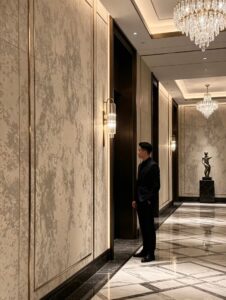
For example, a hotel investing in aged stainless steel for lobby feature walls, elevator interiors, and bar surfaces gains a distinctive design identity without the maintenance burden of authentic vintage metals. The investment pays off through guest perception, reduced maintenance costs, and long-lasting performance.