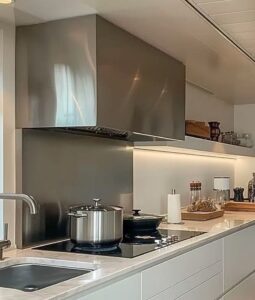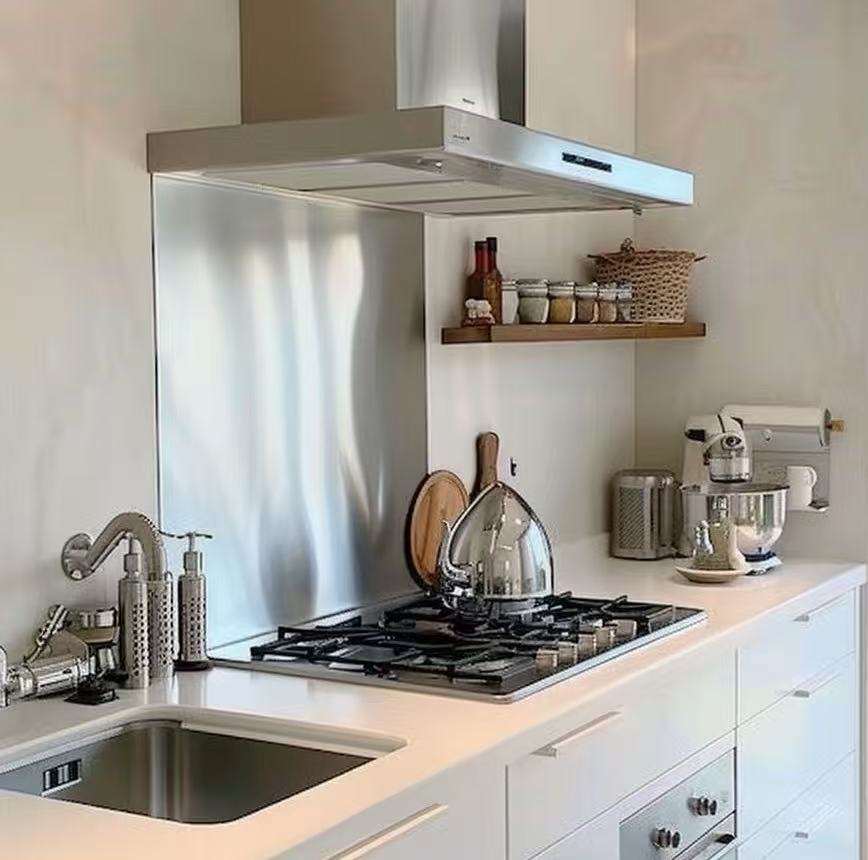
Choosing the right kitchen backsplash requires balancing aesthetics, durability, and maintenance. For homeowners and commercial kitchen designers seeking professional appearance with long-lasting performance, stainless steel remains an industry benchmark. However, not all stainless steel backsplashes are the same. The surface finish plays a crucial role in how the material performs in a real kitchen environment. This guide explains the three most commonly requested finishes for kitchen backsplashes: brushed, sandblasted, and snowflake sand.
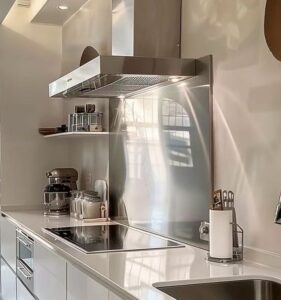
Why Stainless Steel for Kitchen Backsplashes?
Before comparing specific finishes, it is helpful to understand why stainless steel has become a favored material for both residential and commercial kitchens.
Key advantages of stainless steel backsplashes:
-
Non-porous surface – resists bacteria and stains
-
High heat resistance – withstands cooking temperatures
-
Easy to clean – requires only mild detergent and a soft cloth
-
Corrosion-resistant – maintains appearance for decades
-
Matches appliances – creates a cohesive, professional look
For example, a stainless steel backsplash behind a stove catches oil splatters that would be glaringly obvious on painted drywall. The metal surface wipes clean in seconds. Therefore, this material is ideal for busy kitchens where hygiene and low maintenance are priorities.
For a general overview of stainless steel surface types, see our Stainless Steel Decorative Sheet Surface Guide.
Recommended Grade: 304 Stainless Steel
For kitchen backsplash applications, 304 stainless steel is the industry standard. This grade offers the best balance of corrosion resistance, formability, and cost for indoor kitchen environments.
Why 304 for backsplashes:
-
Resists food acids and cooking oils
-
Withstands frequent cleaning with mild detergents
-
Non-magnetic and kitchen-safe
-
Compatible with most kitchen appliances
Therefore, 304 stainless steel is the recommended choice for backsplash projects unless the kitchen is located in a coastal area or exposed to salt air. In such cases, 316 grade should be considered for its superior corrosion resistance.
For detailed comparison of 304 and 316 grades for different environments, read our 304 vs 316 Stainless Steel Grade Guide.
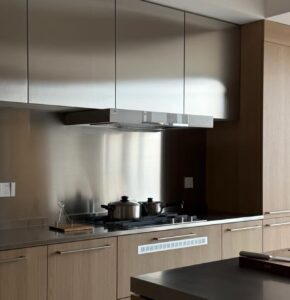
Three Surface Finishes for Kitchen Backsplashes
1. Brushed Finish
The brushed finish is the most common choice for stainless steel backsplashes. It features fine, unidirectional grain lines created by abrasive belts. This finish is also known as No.4 finish in industry terminology.
Visual characteristics:
-
Fine, linear brush marks running in one direction
-
Low to moderate reflectivity
-
Soft, satin-like appearance
Performance advantages:
-
Hides fingerprints – the grain pattern blends smudges
-
Conceals minor scratches – small marks follow the grain direction
-
Non-glare surface – reduces light reflection in brightly lit kitchens
-
Matches appliances – similar finish to most residential kitchen equipment
Best applications:
-
Residential kitchen backsplashes
-
Restaurant prep areas
-
Behind cooking ranges in high-traffic kitchens
For example, a family kitchen with children will benefit from brushed finish because daily cooking splatters and small scratches will be far less visible than on a mirror surface.
Installation note: Brushed stainless steel sheets typically come with a protective plastic layer on the finished side. This should be removed only after installation is complete to avoid accidental scratches.
2. Sandblasted Finish
The sandblasted finish is produced by propelling fine abrasive materials at high speed onto the stainless steel surface. This mechanical process creates a uniform, frosted texture with a matte, non-reflective appearance.
Visual characteristics:
-
Uniform matte texture
-
Soft, satiny appearance
-
No directional grain pattern
-
Frosted appearance
Performance advantages:
-
Minimizes glare – ideal for brightly lit kitchens
-
Hides fingerprints effectively – the textured surface disperses oils
-
Smooth but non-reflective – easier to keep clean than glossy surfaces
-
Industrial-chic aesthetic – contemporary and understated
Best applications:
-
Kitchens with strong task lighting
-
Modern and industrial-style interiors
-
Commercial kitchens where glare reduction is important
-
Areas where a softer, non-reflective surface is preferred
For instance, a kitchen with large windows or high-intensity pendant lights may experience harsh glare from a brushed or mirror finish. A sandblasted stainless steel backsplash eliminates this problem while maintaining the durability of stainless steel.
On the other hand, the sandblasted finish has a more subtle appearance than brushed or hairline finishes. Therefore, it may not create the same professional kitchen visual impact. It is best suited for those who prioritize low glare and modern minimalism.
3. Snowflake Sand Finish
The snowflake sand finish is a specialized surface treatment that creates a distinctive, randomly textured pattern. This finish is unique to the decorative stainless steel industry and offers a decorative alternative to standard finishes.
Visual characteristics:
-
Random, irregular texture pattern
-
Contrast between polished and matte areas
-
Unique, decorative appearance
-
No uniform grain direction
Performance advantages:
-
Highly decorative – creates visual interest beyond standard finishes
-
Hides fingerprints well – irregular texture disperses marks
-
Conceals minor scratches – random pattern breaks up visible lines
-
Distinctive look – differentiates from common finishes
Best applications:
-
Designer kitchens seeking unique aesthetic
-
Luxury residential projects
-
Feature walls and accent areas
-
Commercial kitchens wanting distinctive branding
For example, a high-end villa kitchen with custom cabinetry might choose snowflake sand stainless steel for the backsplash to create a unique, designer look that sets the property apart from standard homes.
On the other hand, snowflake sand finish is more expensive than brushed finish due to the specialized equipment and process involved. Therefore, it is typically reserved for premium projects where distinctive appearance justifies the additional cost.
Comparison: Which Finish Should You Choose?
| Consideration | Brushed | Sandblasted | Snowflake Sand |
|---|---|---|---|
| Fingerprint hiding | Good | Excellent | Excellent |
| Glare reduction | Moderate | Superior | Good |
| Scratch hiding | Good | Moderate | Excellent |
| Visual impact | Classic, professional | Modern, subtle | Unique, decorative |
| Cost | Lowest | Moderate | Highest |
| Match appliances | Excellent | Fair | Limited |
Therefore, the choice depends on your priorities:
-
Choose brushed for classic professional kitchen appearance and appliance matching.
-
Choose sandblasted for modern minimalism and glare-free performance.
-
Choose snowflake sand for distinctive luxury and unique design.
Thickness Selection for Kitchen Backsplashes
Stainless steel sheets for backsplashes typically range from 0.6mm to 1.5mm thick.
-
0.6mm – 0.8mm – Standard wall backsplashes on flat substrate
-
1.0mm – 1.2mm – Commercial kitchens, impact-prone areas
-
1.5mm+ – Heavy-duty applications
For standard residential backsplash installations, 0.8mm thickness is typically sufficient. However, commercial kitchens or areas expecting heavy impact should consider 1.0mm or 1.2mm for additional durability.
Installation Considerations
Substrate Preparation
Before installing any stainless steel backsplash, ensure the wall surface is flat and smooth. Any imperfection in the wall will telegraph through thinner sheets. Therefore, prepare the substrate properly before installation.
Key steps:
-
Remove any existing backsplash material
-
Repair holes or depressions with filler
-
Sand surface smooth
-
Ensure wall is clean and dry
Adhesive and Fixing Methods
Stainless steel backsplashes can be installed using construction adhesive or mechanical fixings.
Adhesive method (recommended for clean appearance):
-
Apply full-coverage adhesive to the back of the sheet
-
Press firmly against the wall
-
Use a soft cloth to remove air bubbles
-
Allow adhesive to cure fully before removing protective film
Mechanical fixing method:
-
Mark and drill wall mounting holes
-
Secure with provided screws (for pre-drilled panels)
For example, many homeowners prefer adhesive installation because it leaves no visible screw heads, creating a cleaner, more professional appearance.
Grain Direction
For brushed finish backsplashes, consider the grain direction during installation. Most installations orient the grain vertically for a clean, uniform look. Therefore, specify grain direction when ordering your panels.
Cleaning and Maintenance
All three finishes are easy to maintain with proper care.
Do:
-
Clean with mild soap and warm water
-
Wipe with a soft cloth or microfiber towel
-
Rinse with clean water
-
Dry with a soft cloth to prevent water spots
Do not:
-
Use abrasive pads or steel wool
-
Clean with bleach or chlorine-based products
-
Use stainless steel polish on sandblasted or snowflake finishes, as this may affect the texture
For example, a quick wipe after each cooking session prevents grease buildup and maintains the finish for years.
Frequently Asked Questions
Q: Which finish is best for a kitchen backsplash?
A: Brushed finish is the most popular choice for residential kitchens because it matches appliances, hides fingerprints, and offers the best cost-performance balance.
Q: Does sandblasted stainless steel scratch easily?
A: Sandblasted finishes have a textured surface that makes minor scratches less visible than on brushed finishes. However, deep scratches may be more difficult to repair due to the texture.
Q: What is the difference between hairline and brushed finish?
A: Hairline finish has finer, more uniform grain lines than brushed. Brushed has slightly coarser grain and lower reflectivity. For backsplashes, both work well, though brushed is more common.
Q: Can I install stainless steel backsplash over tiles?
A: Not recommended. Existing tile surfaces are uneven, and imperfections will telegraph through thin stainless steel sheets. Therefore, remove old tiles and flatten the wall before installation.
Q: Which grade should I choose for kitchen backsplash?
A: 304 stainless steel is the standard choice for indoor kitchen backsplashes. Choose 316 only for coastal kitchens or if the installation involves outdoor exposure.
Q: Do these finishes come with protective film?
A: Yes. Stainless steel sheets for backsplash applications typically come with a protective plastic film on the finished surface. Remove this film only after installation is complete to prevent scratches.
Conclusion
Stainless steel kitchen backsplashes offer durability, hygiene, and professional appearance unmatched by other materials.
For most residential kitchens: Choose brushed finish – it matches appliances, hides everyday wear, and offers the best value.
For brightly lit or modern kitchens: Consider sandblasted finish – it eliminates glare and creates a contemporary, understated look.
For luxury or designer kitchens: Explore snowflake sand finish – it delivers unique visual character and distinctive appearance.
For example, a kitchen designer specifying materials for a luxury home might choose snowflake sand for the feature backsplash behind the range and brushed finish for other wall areas to balance impact and budget.
Therefore, discuss your specific requirements with your supplier to ensure the perfect result for your kitchen project.